 ARMY FITNESS APPAFT ProAFT Pro— Army Fitness Test CalculatorDownload for iPhoneGet it on Google Play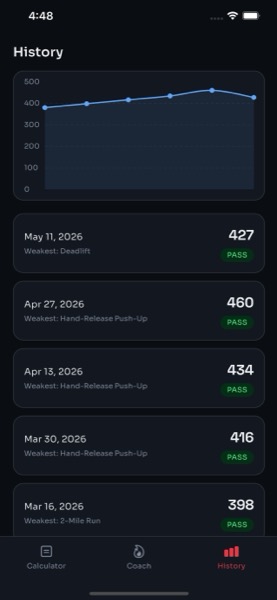
The last record ACFT before separation does something most soldiers don’t think about: it goes on your DD-214 supporting documents and follows you for years. Federal hiring managers can see your separation-window fitness score. VA disability examiners reference recent fitness records. Civilian employers occasionally request the score in security-clearance contexts. The casual mindset many soldiers take into their final record test — “I’m getting out anyway, just need to pass” — leaves them with a record that doesn’t reflect their actual capability.
For service members within 12 months of separation, here’s how to think about that final ACFT and why putting effort into it pays dividends post-service.
Where Your Final Score Shows Up
Three downstream uses of your transition-window ACFT:
1. VA disability claims. Recent fitness records help establish baseline functioning at separation. If you later claim a service-connected musculoskeletal condition, your final ACFT documentation supports the claim or undermines it depending on what’s there. A score showing intact deadlift, push-up, and run performance argues against a claim for major back, shoulder, or knee impairment. A score showing significant degradation in events supports it.
This isn’t about gaming the system — it’s about having an accurate record. If you actually have a service-connected back issue affecting your deadlift, the record should reflect it. If the condition genuinely hasn’t affected your performance yet, the record should reflect that too.
2. Federal hiring credit. Federal agencies sometimes consider physical capability for specific roles (federal law enforcement, security positions, certain operational positions). Your separation-window fitness score is part of your documented capability profile. A strong final score doesn’t hurt; a weak one can affect specific role considerations.
3. Civilian roles requiring physical capability. Defense contractors with operational roles, security positions, and certain industrial roles consider fitness documentation as part of qualification. The reference point is often your final military fitness score.
The 12-Month Pre-Separation Window
For most soldiers, the final record ACFT lands within 6-12 months of separation. Plan the training cycle backward from that date:
12 months out: baseline. Score yourself on each event. Identify weak events. Begin focused training.
9 months out: strength foundation. Volume work on deadlift, push-ups, plank holds. Consistent aerobic base for the 2MR.
6 months out: intensity build. Heavier deadlifts, sprint work on the SDC pattern, plank progression past 2 minutes.
3 months out: specificity peak. Mock ACFTs every 3-4 weeks. Adjust training based on what each mock reveals.
1 month out: taper to test day. Reduce volume, allow full recovery, peak on test day.
This is a more deliberate cycle than most career-stage soldiers run. The reason: the final test matters more than any single intermediate test. You’re optimizing for the score that becomes part of your transition record.
Event-Specific Final-Test Priorities
Different events benefit from different preparation approaches in the final window:
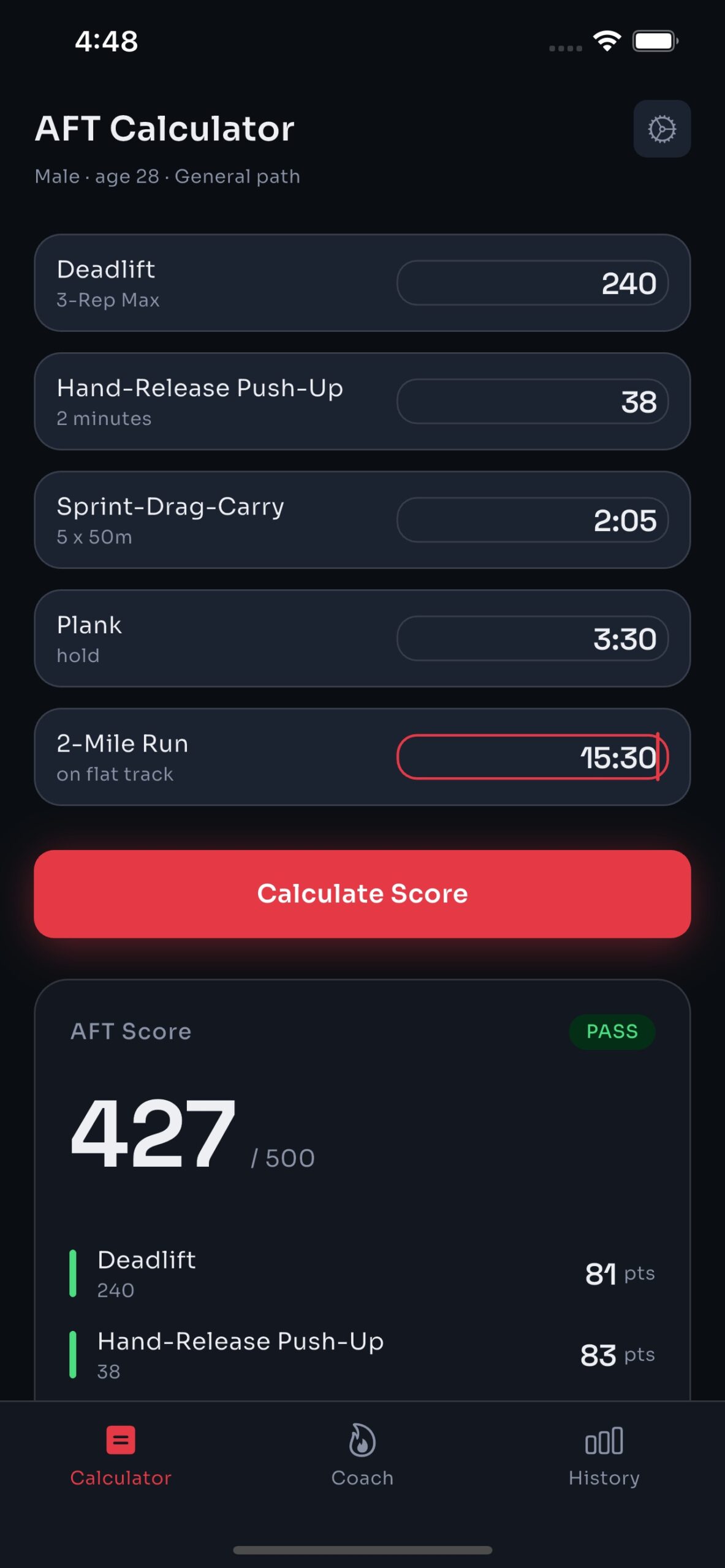
Deadlift. If your current 3RM is in the 220-280 lb range, focused training over 12 weeks typically adds 40-60 lbs. That’s a meaningful score jump from the mid-70s to mid-90s point range. The strongest single-event ROI in the final cycle.
Plank. Many soldiers leave 20-30 points on the table because plank isn’t trained specifically. Daily 1-2 minute holds, building to test-day capability of 3+ minutes, is a low-time-investment way to boost the score.
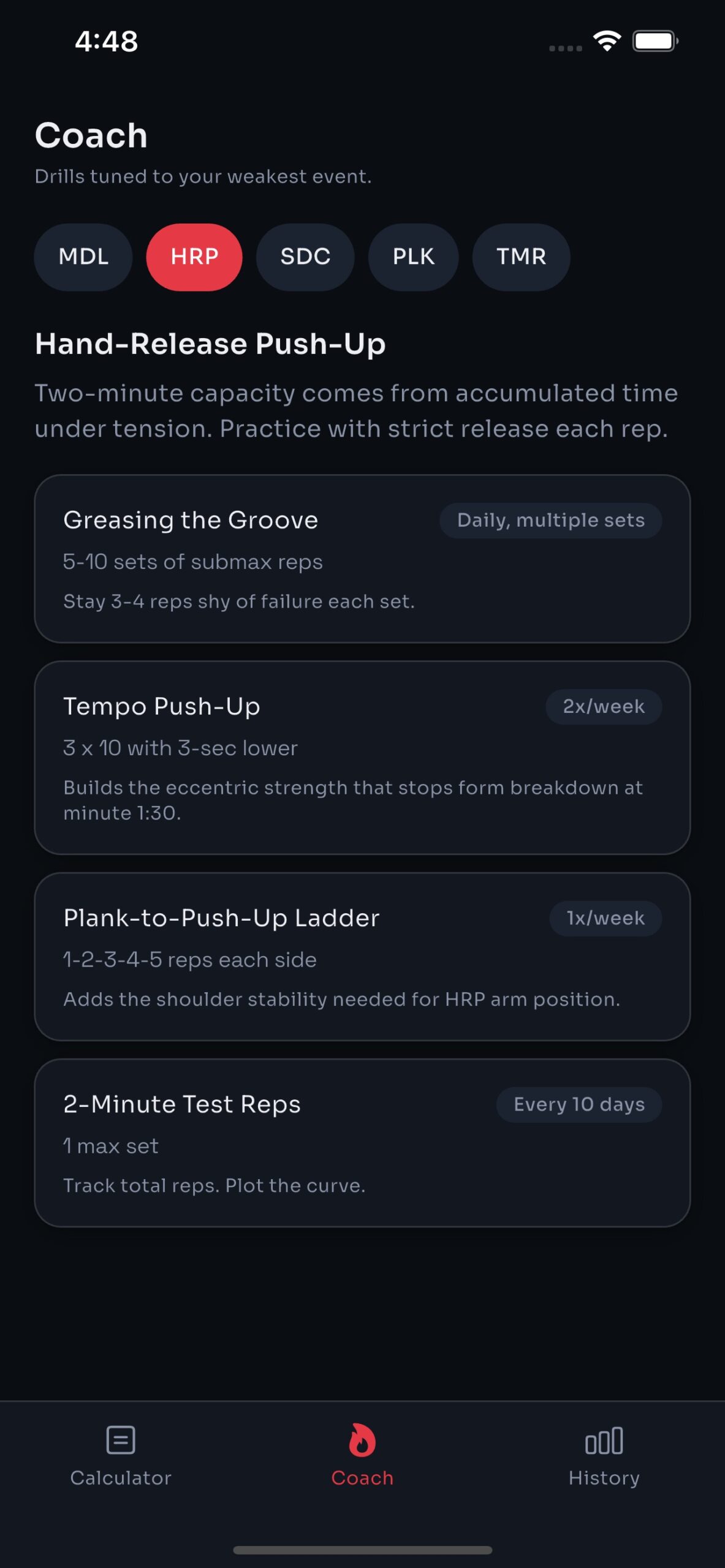
Push-ups. The hand-release format penalizes form breakdown. Greasing-the-groove (5-10 reps multiple times daily for 8-12 weeks) builds the muscular endurance specifically.
Run. Hardest to dramatically improve in a single cycle. Most gains come from accumulated aerobic base over 6+ months. If you’ve been a casual runner, 12 weeks of structured base-building plus interval work can shave 30-45 seconds off the 2-mile time.
SDC and SPT. Technique events. Practice the actual movement patterns. SPT improvement comes from throwing the medicine ball multiple times per week.
ARMY FITNESS APPAFT ProProject your separation-window scoreDownload for iPhoneGet it on Google PlayThe VA Disability Interaction
A nuance most transition counselors don’t explicitly address: the final ACFT can both help and hurt VA disability claims depending on what’s on it.
If you intend to claim service-connected knee, back, shoulder, or general musculoskeletal conditions, your final ACFT documentation should be honest. If your deadlift dropped 50 lbs from your peak because of a back issue, that’s relevant evidence. If your run time degraded 90 seconds because of knee pain, that’s evidence too.
The mistake some soldiers make: they push through the final test ignoring the conditions, post a strong score, then later file VA claims for severe conditions. The records don’t match. The strong test score becomes contrary evidence in the disability claim.
The honest approach: take the final test at your honest current capability. If you’re impaired, the score should show it. If you’re fine, the score should show that. Either way, the documentation matches your actual state, which is what serves you long-term.
For service members claiming pain or impairment but performing close to peak, the C&P examiners will reference the fitness record. Inconsistency between claimed disability and recent ACFT scores creates credibility issues.
Documentation You Should Save
For transition-window soldiers:
1. Your final ACFT score sheet. Get a copy from your unit. Save it digitally and physically. Part of your transition documentation.
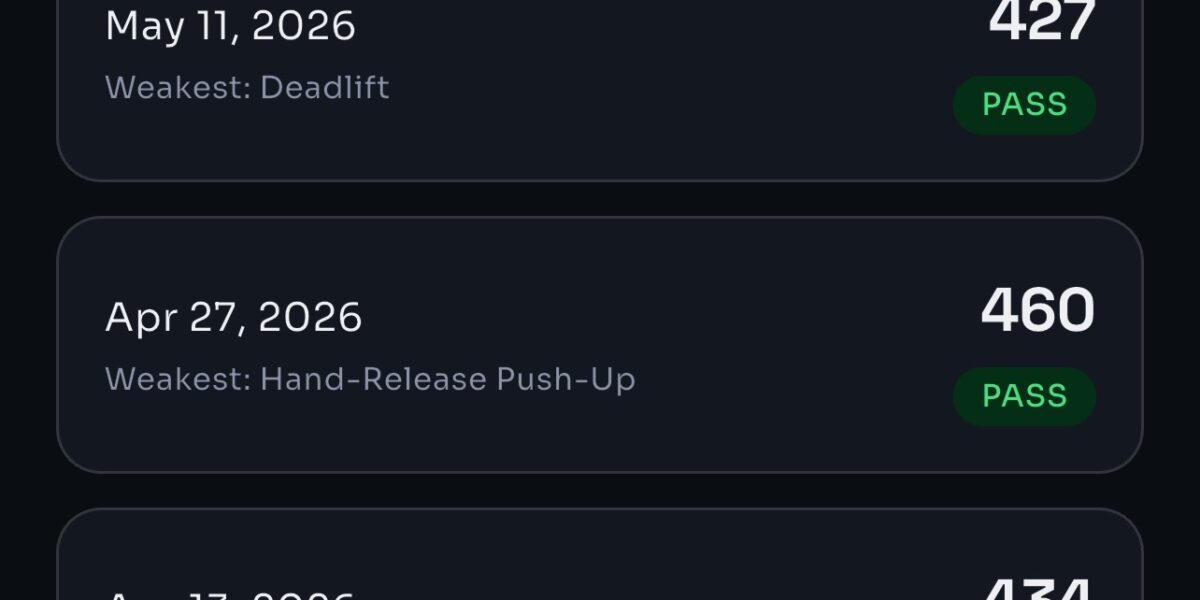
2. All record-test scores over the past 24 months. Shows trajectory — improving, stable, or declining. Useful context for VA claims and federal hiring.
3. Profile / medical waivers if applicable. If you took the test under a profile (some events waived due to injury), the waiver documentation matters as much as the score.
4. Training records showing preparation. Less important but useful in some cases. Training logs from AFT Pro or similar apps show pre-test fitness state.
This documentation accompanies your DD-214 in the personal transition file you maintain. Federal hiring often requests this; VA examiners reference it during C&P examinations; some civilian employers ask about it.
The Score Targets for Different Post-Service Paths
Approximate score targets depending on post-service plans:
Standard civilian employment + VA claim pending: 380-450 combined. Solid score showing maintained capability. Doesn’t trigger questions about disability claim consistency.
Federal law enforcement or security: 450-500+ combined. Some agencies have specific fitness standards; meeting or exceeding ACFT 90th percentile signals capability.
Defense contractor operational roles: 480+ combined. Demonstrates the physical readiness many of these roles require.
VA disability claim for major impairment: Score should reflect actual impairment. Don’t push for a high score that contradicts your claimed disability. Honesty over performance.
Standard civilian employment, no specific physical requirement: Pass the test. The exact score matters less. Don’t sacrifice training time better spent on transition activities (resume building, interview prep, certification courses).
What to Do This Quarter
For soldiers within 12 months of separation:
1. Calendar the final record test date. Confirm when your unit schedules it. Plan backward from that date.
2. Take a current baseline mock-ACFT. Know where you are today. Don’t assume you remember.
3. Identify your weakest event. That’s where to invest the most training time. Focused weak-event work moves the score more than balanced training.
4. Plan honest training around any service-connected conditions. If you have legitimate impairments, train within them rather than ignoring them. The test result then accurately reflects your state.
5. Save all documentation. Mock test results, training logs, the final score sheet. Part of your transition file.
The final ACFT is one of the more consequential single tests of your military career. Treat it that way.
For the underlying ACFT scoring tables and event-by-event breakdown, see the full 2026 ACFT scoring guide.
ARMY FITNESS APPAFT ProScore every event, project totals, plan the 12-week run to your separation-window record test.Download for iPhoneGet it on Google Play



Leave a Reply