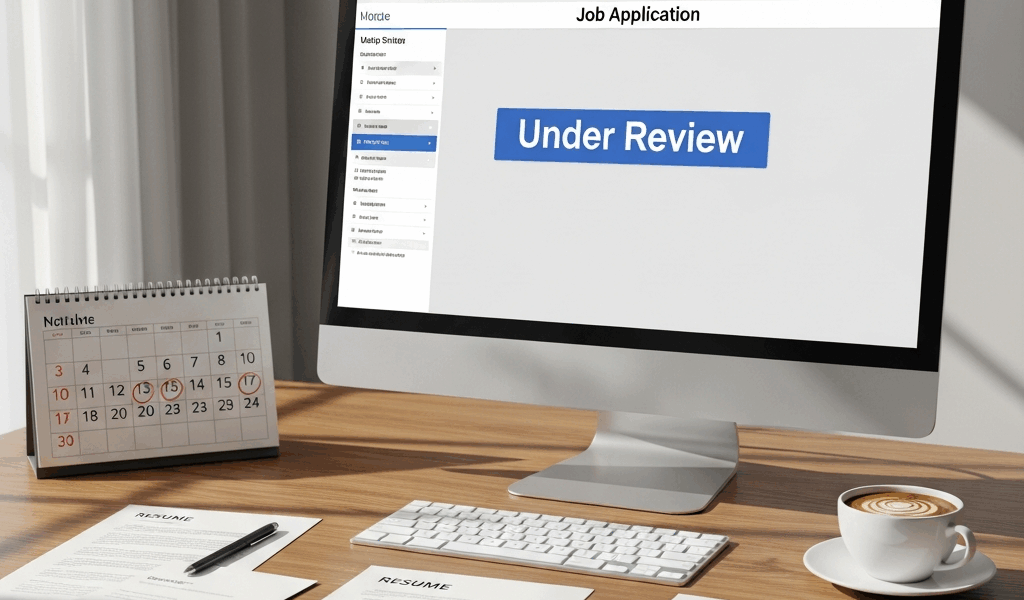
What “Under Review” Actually Means in Federal Hiring
Federal hiring has gotten complicated with all the conflicting information flying around — especially for veterans trying to decode what USAJOBS is actually telling them.
As someone who burned through three federal applications refreshing that status page at 6 a.m. like it would change something, I learned everything there is to know about what “under review” actually means. Today, I will share it all with you.
But what is “under review”? In essence, it’s confirmation that your application cleared automated screening. But it’s much more than that — and the gap between what it sounds like and what it actually is will mess with your head if nobody explains it.
No human has read your resume yet. The USAJOBS interface deserves real blame for how badly it communicates this. What happened is your application passed keyword matching, form field validation, that kind of mechanical triage. What has not happened is any actual hiring manager or HR specialist sitting down with your materials. That part comes later. Maybe much later.
What’s happening behind the scenes varies depending on which federal hiring track you’re on. For veterans specifically, this stage means background checks, security clearance processing, and — critically — veteran preference point verification. The system is cross-referencing your DD214. Service branch, active duty dates, whether you qualify for the 5-point or 10-point preference bump. Sometimes that’s automated. Sometimes a human has to do it manually. That’s where the wait comes from.
Automated screening takes hours. Veteran preference verification takes days to weeks. That distinction alone should stop you from Googling this at midnight wondering if you’ve been quietly rejected.
How Long “Under Review” Usually Takes and Why It Varies
Here’s what OPM’s official guidance won’t tell you: realistic timelines depend entirely on which agency posted the job. So, without further ado, let’s dive in.
DoD postings can sit in “under review” for 30–60 days. The VA tends to move faster — often somewhere in the 14–30 day range. DHS skews slower, partly because their background investigations feed directly into clearance applications, and that process has its own bureaucratic weight. Small agencies like the Broadcasting Board of Governors? Usually 7–14 days. None of this is a guarantee. These are ranges based on what veterans actually report, not what any job posting optimistically promised when it said “selections will be made within 30 days.”
Several specific factors stretch the timeline:
- Hiring freezes at the agency level — common during budget cycles, and less common but still real during personnel reductions
- Certificate issuance delays — the certificate is the ranked list of qualified candidates that goes to the hiring manager, and some agencies batch these weekly instead of generating them on demand
- Veteran preference point adjudication, which requires manual review when your DD214 is unclear, shows service gaps, or lists discharges other than honorable
- Schedule A (disability hiring authority) or VRA (Veterans Recruitment Appointment) applicants face an additional documentation review that adds roughly 5–10 days on its own
- Contractor HR support versus actual federal employees doing the processing — contractors often move slower because they’re juggling multiple agencies simultaneously
Your agency’s staffing levels matter too. Three HR people processing 800 applications is not a hypothetical. It’s Tuesday at a mid-size federal office. This is not a complaint department situation — it’s just the reality of federal hiring at scale.
Why Veterans Sometimes Get Stuck Longer Than Civilians
Frustrated by [the timeline] compared to civilian friends going through private sector hiring? That’s fair. But the holdup usually isn’t discrimination — it’s process friction specific to how the federal government adjudicates military service records.
Your DD214 has to match what’s in the database at the National Personnel Records Center in St. Louis. Sometimes it doesn’t — not immediately. Army National Guard versus active duty Army: the system flags it. Active duty to reserves to guard over a ten-year span: someone has to actually read your documents and make a manual determination. The automated system does not handle exceptions. It just stops and waits for a human.
Veteran preference verification is the single biggest delay factor in this whole process. You claim 5 or 10 points based on your service. The system verifies this. But if your discharge paperwork shows a General Discharge under honorable conditions — which disqualifies you from preference under most circumstances — or if your service dates are ambiguous, the process stops. HR either contacts you directly or requests updated documentation from the National Archives. That request alone can take two weeks to process.
Schedule A applicants get an extra step on top of that: HR has to verify your disability documentation matches OPM’s approved conditions list. If you claimed a condition that requires additional supporting evidence, add another 10–14 days minimum.
VRA eligibility runs into its own timing issues. You have to have separated from active duty within the last three years — with some exceptions for disabled veterans. The system checks your separation date against today’s date, but it’s relying on whatever date exists in the database. If that date doesn’t match your actual separation orders, someone has to investigate the discrepancy manually.
Civilian applicants don’t have any of this. Their verification layer simply doesn’t exist. That’s what makes the federal process endearing to us veterans — we get extra scrutiny as a reward for our service. Mostly it’s just slower.
When You Should Actually Follow Up and How to Do It
Probably should have opened with this section, honestly.
Don’t follow up before 30 days have passed from the job posting’s closing date. Hiring managers never see early follow-ups — they’re not looking at your application status personally. HR sees them. Multiple inquiries flag your application as difficult, and that perception does not help you. Thirty days minimum. Set a calendar reminder and close the tab.
After 30 days, go back to the original job announcement. Find the “How to Apply” section — there should be a specific email address and sometimes a direct phone number for HR contact on that posting. This is not the agency’s general HR line. This is the point of contact for that specific announcement. Email over calling, every time. It creates a record and gives the specialist time to pull up your file before responding.
Here’s what to say:
“Hello. I applied for [Job Title], Announcement [Number], on [Date]. My application currently shows ‘under review’ status as of [Today’s Date]. I wanted to confirm my application is progressing normally and ask about the expected timeline for a hiring decision. Please let me know if any additional documentation is needed. Thank you.”
Short. Neutral. No mention that you’re a veteran — they already know. Don’t ask why it’s taking so long. Don’t ask them to expedite anything. Just confirm you exist in the queue and haven’t been silently dropped.
If they come back saying your veteran preference verification is on hold because of DD214 documentation issues, send whatever they need within two business days. Don’t make my mistake — I waited five days to respond to one of those requests and lost my spot on a cert. If they say everything looks fine and you’re still 30–45 days out, accept that. Follow up again only if 45 days pass with no status change.
Status Changes That Mean You’re Moving Forward — or Out
After “under review,” USAJOBS will eventually flip to one of several labels. What those labels actually mean is more layered than the interface suggests.
Referred means you made the certificate. HR confirmed you met basic qualifications, verified your preference points, and put you on the ranked list going to the hiring manager. That’s a real milestone — you’re now competing against maybe 5–15 people instead of hundreds. The hiring manager will actually see your name.
Not Referred is harder to interpret, especially with veteran preference points in play. If you had 10 points and didn’t get referred, something went wrong. Either your documentation didn’t verify correctly, your discharge characterization disqualified you, or — less commonly — the job closed after cert issuance and no action was ever taken. Email HR immediately: “I received a ‘not referred’ status for Announcement [Number]. I believed I was eligible for veteran preference. Could you provide a copy of the certificate or explain the reason for the non-referral?” They’ll either send you the certificate or explain the disqualification. Factual errors are disputable. Get the paperwork first.
Hired is self-explanatory. You cleared the interview, the background investigation, and whatever agency-specific requirements were still outstanding. Congratulations.
No Longer Being Considered usually means the position was cancelled, the req got frozen, or your application didn’t survive a second-pass qualification review. Sometimes it means the hiring manager picked someone else and HR closed out the remaining applicants. If you see this before ever being referred, something in your materials didn’t pass on closer inspection. You can ask for specifics — I’m apparently persistent enough to always send that email — but often HR will only confirm you didn’t meet basic requirements without elaborating further.
“Under review” is not a waiting room. It’s active work happening somewhere in a system you can’t see. Knowing what that work actually involves makes the wait at least make sense, even when it still takes forever.




Leave a Reply