 Free ReferenceUS Military RanksComplete rank insignia, pay grade reference, and promotion timelines for all six US military branches. Built for service members, transitioning vets, and civilians who need to understand military structure.Download for iPhoneGet it on Google Play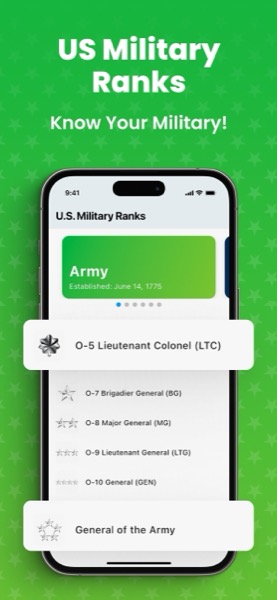
When you’re transitioning out of military service and applying for civilian jobs, one of the underrated challenges is translating your rank into something a civilian hiring manager can evaluate. A staff sergeant with eight years of leadership experience and a major’s worth of responsibility doesn’t have a clean civilian equivalent. The federal hiring system has its own pay-grade translator (GS levels), but private-sector recruiters are usually flying blind on military rank structure.
This is the gap most transitioning veterans hit during their first civilian job search. After ten years counseling soldiers through transition and watching this play out for thousands of separations, here’s the realistic translator — what your pay grade means in civilian terms, how to map it to federal GS levels, and how to position your military experience for hiring managers who don’t speak the language.
The Pay Grade System — Six Branches, One Structure
All US military branches share the same pay grade system, even though the rank titles differ:
- Enlisted: E-1 through E-9 (junior enlisted, NCOs, senior NCOs)
- Warrant Officers: W-1 through W-5 (technical specialists between enlisted and officer)
- Officers: O-1 through O-10 (junior officers, field grade, general/flag officers)
For pay and broad structural comparison purposes, the pay grade is the universal identifier. A Navy E-7 and an Army E-7 are at the same pay grade with different titles (Chief Petty Officer vs Sergeant First Class).
Translating to Federal GS Pay Grades
The federal government has formal crosswalks between military rank and GS (General Schedule) pay grades. These are the official benchmarks recruiters at federal agencies use when reviewing military veteran applications:
| Military Pay Grade | Example Ranks | Federal GS Equivalent |
|---|---|---|
| E-1 to E-3 | Private to Specialist; Seaman; Airman 1st Class | GS-1 to GS-3 |
| E-4 to E-5 | Corporal/Specialist; Sergeant; Petty Officer 3rd/2nd | GS-4 to GS-5 |
| E-6 to E-7 | Staff Sergeant; Sergeant First Class; Petty Officer 1st/Chief | GS-6 to GS-8 |
| E-8 to E-9 | Master Sergeant; First Sergeant; Senior Chief; Master Chief | GS-9 to GS-11 |
| W-1 to W-3 | Warrant Officer to CW3 | GS-7 to GS-10 |
| W-4 to W-5 | CW4; CW5 | GS-11 to GS-13 |
| O-1 to O-3 | Second Lt; First Lt; Captain | GS-7 to GS-11 |
| O-4 to O-5 | Major; Lieutenant Colonel; Lieutenant Commander/Commander | GS-12 to GS-14 |
| O-6 | Colonel; Captain (Navy) | GS-15 |
| O-7 and above | General/Flag Officers | SES (Senior Executive Service) |
These are general crosswalks; specific agencies use slightly different mappings. The Office of Personnel Management (OPM) publishes guidance for federal hiring managers reviewing military applicants. Veteran’s preference (5-point or 10-point) on federal applications layers on top of this base mapping.
Private Sector — Where the Translation Breaks Down
Federal hiring is structured. Private sector hiring is not. A hiring manager at a tech company has no idea what an E-7 is, what their compensation history looked like, or how to evaluate their leadership experience against MBA-track candidates.
Realistic mappings for private-sector application materials:
E-4 to E-5 (4-6 years of service): Roughly equivalent to a college graduate with 2-3 years of post-graduation work experience. In compensation terms, $45,000-$65,000 entry-level professional range. Highlight specific technical skills and leadership of small teams.
E-6 (6-10 years of service): Senior professional with team leadership. Compensation reference: $65,000-$85,000 mid-career professional. Frame as “team lead with operational responsibility for X.”
E-7 to E-8 (10-18 years): Senior management equivalent. $85,000-$120,000 range. Position as “operations manager” or “department head” depending on your specific role. NCOs at this level often supervised 30-50 personnel and managed million-dollar equipment inventories — that’s senior management responsibility in civilian terms.
E-9 (20+ years): Executive-level operational expertise. $120,000-$160,000. Senior leaders below the C-suite. Position carefully — the rank reflects exceptional operational expertise but doesn’t map to strategic-business roles without translation.
O-1 to O-3 (under 8 years): Junior to mid-level manager. $65,000-$110,000 depending on field. Often pursued MBA or specialized degrees, which strengthens private-sector positioning.
O-4 (10-14 years): Mid-level executive. $110,000-$160,000. Field-grade rank reflects significant management and strategic experience.
O-5 to O-6 (14-22 years): Senior executive. $160,000-$250,000+. Field-grade to senior officers have managed organizations of 100-2,000+ people with multi-million-dollar budgets.
These are rough mappings, and actual private-sector outcomes depend heavily on industry, geography, MOS/job specialty, and how well the veteran translates their experience.
The Translation Process — How to Position Each Element
Three layers of translation that matter on a resume:
1. The job title. “Sergeant First Class” means nothing to a civilian hiring manager. Translate to function: “Senior Operations Lead — managed 24-person logistics platoon supporting $4M equipment inventory.”
2. The scope. Quantify everything. Number of personnel supervised, budget managed, equipment value, geographic scope, operational tempo. Civilians evaluate management roles by these metrics; the rank itself doesn’t communicate them.
3. The accomplishments. Specific outcomes, not duties. “Reduced equipment downtime by 35% through implementation of preventive maintenance program.” Numbers, percentages, dollar amounts. NCOs and officers rarely think in these terms during service — accomplishments-with-numbers requires deliberate translation work during transition.
MILITARY RANKS APPUS Military RanksReference all 6 branches’ rank structures in one appDownload for iPhoneGet it on Google PlayFor Federal Job Applications
Federal hiring uses USAJOBS and follows OPM guidance. Pay-grade mapping is more formal:
The federal hiring process recognizes specific veteran categories:
- 5-Point Preference: Veterans with honorable discharge and qualifying service
- 10-Point Preference: Disabled veterans, Purple Heart recipients, certain spouses
- 30% or More Disabled Veteran: Highest preference category, specific direct-hire authorities apply
- VEOA (Veterans Employment Opportunity Act): Allows veterans to apply to merit promotion vacancies (typically reserved for current federal employees)
- VRA (Veterans’ Recruitment Appointment): Special hiring authority for veterans up to GS-11
For pay-grade self-assessment in federal applications, the rule is: claim the GS level where your military experience would actually qualify you to perform the job. An O-4 with operations experience might legitimately apply for GS-13 or GS-14 positions depending on the specific role. The pay-grade mapping is a floor, not a ceiling.
For Private Sector — Industry-Specific Crosswalks
Different industries value military experience differently:
Defense contractors (Lockheed, General Dynamics, Northrop, etc.): Highest direct translation. They understand rank, security clearance, and military operations intimately. Expect to be evaluated by rank-equivalent comparison. Compensation can be near or exceeding federal GS equivalents.
Federal contractors (Booz Allen, SAIC, Leidos, CACI): Strong understanding of military experience. Many roles require active clearances, which adds value. Compensation ranges align loosely with GS levels for similar work.
Technology and tech-adjacent (cloud, cybersecurity, software): Variable. Cybersecurity firms with government contracts understand military experience well. Pure-tech roles depend on the veteran’s specific technical skills more than rank.
Manufacturing, logistics, supply chain: Strong fit for senior enlisted (E-7 through E-9) and warrant officers with technical specialties. Skills transfer directly. Compensation reflects management responsibility.
Finance, consulting: Depends heavily on degree credentialing. MBA-track officers transition well. Enlisted backgrounds need to leverage problem-solving and leadership over technical financial knowledge.
Common Pitfalls in Rank Translation
Three patterns I see derail civilian-job applications:
1. Inflating the translation. Translating E-5 to “executive” or “senior manager” rather than “team leader” reads as defensive. Civilian hiring managers will be skeptical; the over-positioning damages credibility.
2. Under-translating. The opposite mistake — describing an E-8’s role as “managed people” when they actually had operational responsibility for 50+ personnel and $20M in equipment. Be specific and quantified.
3. Using military terminology unchanged. “Platoon sergeant” means nothing in private sector. “Operations manager for a 30-person logistics team” is the translation. Same role, civilian-readable framing.
The App Approach to Rank Reference
For service members and recent transitioners, having a rank reference handy serves multiple purposes:
- Quick insignia identification when interacting with personnel from other branches
- Pay grade reference for transition-stage application materials
- Helping spouses, family, and civilian network understand military hierarchy
- Reference for veterans working with currently-serving family members
For civilians working with military populations — federal agency HR staff, contractor recruiters, financial advisors serving veteran clients, healthcare providers serving veterans — rank reference is essential context for accurate communication.
What to Do During Transition
Three actions related to rank translation in your transition:
1. Build a rank-to-civilian translator for your resume. Write out every position you held with both the military title and the civilian-equivalent description. This becomes your master resume from which targeted versions get cut.
2. Practice the verbal translation. When asked “what was your last job in the military?” don’t say “I was a SFC E-7 platoon sergeant.” Say “I led a 30-person operations team managing logistics for a battalion of 800.” Practice this until it’s natural.
3. Research industry-specific equivalents. Look at job postings at companies you’re targeting and identify the title level that matches your experience scope. Apply at that level, not below it (under-positioning is more common than over-positioning).
Quick Rank ReferenceUS Military Ranks300+ insignia, all six branches, pay grade reference, and an interactive quiz mode. Useful during transition and for working with military populations after separation.Download for iPhoneGet it on Google Play
Leave a Reply