What Veteran Preference Actually Means in Practice
Federal hiring preference has gotten complicated with all the misinformation flying around. Veterans hear “preference points” and assume the job is practically theirs. It isn’t — and nobody in the process seems eager to explain why.
I spent three years watching veterans celebrate their preference status, then watched those same people spiral into frustration when their applications evaporated. The mechanics are simple enough. Preference adjusts your ranking on the certificate list — the ranked stack of candidates a hiring office actually reviews. Score 82 on the exam with 5-point preference? You’re sitting at 87. Ten-point preference bumps you to 92. That’s the whole engine. Nothing more mysterious than that.
The gap between 5-point and 10-point preference matters more than most people realize. Five-point goes to anyone with an honorable discharge. Ten-point is reserved for veterans carrying a service-connected disability rating from the VA, Purple Heart recipients, and those who served on active duty during a campaign where a badge was authorized. The VA disability rating is the one everyone thinks of — and the one most people botch the paperwork on.
Here’s what the brochures skip entirely: preference does not apply to Senior Executive Service positions. Doesn’t apply to direct-hire authority jobs. And it absolutely cannot drag an unqualified applicant into the qualified pile. You have to meet minimum qualifications first. Preference only reshuffles the deck once you’re already in the game.
Probably should have opened with this section, honestly. Veterans call their representatives convinced their preference was stolen. Nine times out of ten, the position filled through direct hire — or the job closed before a certificate list ever existed. Setting that expectation upfront saves everyone a lot of grief.
How to Claim Your Preference on USAJobs Step by Step
Log into USAJobs. Open your profile. Find the “Military Service” section. Enter your information there. This is not optional and it is not automatic.
First, you verify your military service details — branch, active duty dates, discharge status. Enter everything exactly as it appears on your discharge papers. USAJobs cross-checks against Department of Defense records. One date off by a single day and the whole claim is at risk. Don’t approximate.
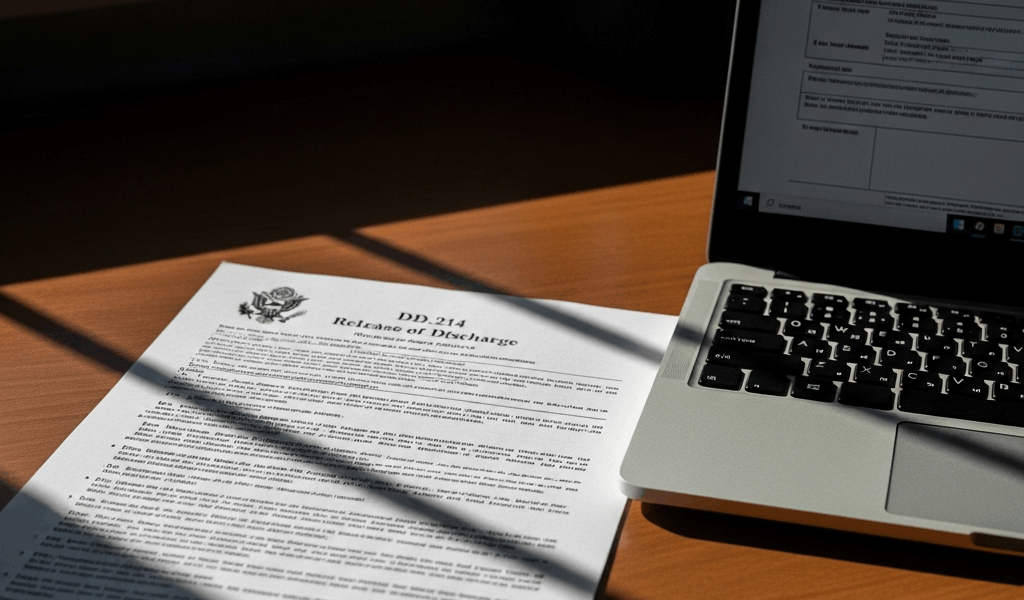
Next is the upload. You need a DD-214, Member 4 copy. Not the version with your SSN exposed. Not the condensed copy. Member 4 is the official document for civilian employers and federal agencies — it lists character of discharge, service dates, and awards. Auditors notice when you submit the wrong version. The difference is real and the consequences are annoying.
Claiming 10-point preference adds another layer. You’ll need a VA disability letter showing your current rating percentage. Not a letter from 2015. Not a screenshot. A current rating decision letter or benefits statement works — federal hiring offices verify against VA records, and outdated documentation gets flagged almost immediately.
Here’s where a lot of people stumble: 10-point preference also requires an SF-15. It’s called “Application for 10-Point Veteran Preference.” Four pages. Download it from OPM.gov, fill it out, attach your documentation, submit it with your application. I’ve apparently developed a habit of repeating this because hiring offices return incomplete SF-15 forms constantly — missing a signature date, missing a box checked. Don’t make my mistake of assuming it’s self-explanatory.
The single biggest error I see repeated over and over: uploading documents to a profile once and assuming they carry forward forever. They don’t. You upload per application. Every posting. Every single one. I’ve talked to veterans who swore their preference disappeared after two or three applications — they uploaded documents once, years earlier, and never revisited them. The system doesn’t remind you.
When you apply to a specific posting, the application flow prompts you to claim preference — 5-point or 10-point, your documentation, your SF-15 if applicable. That step is not cosmetic. Do not skip it assuming the profile already handled it.
Why Your Preference Points May Not Be Working
You applied. You claimed preference. Weeks passed. The agency hired someone else. Your points appear to have done nothing. Here’s what probably happened.
If the same role was filled within a few days of posting: Direct-hire authority. Certain occupations and critical shortage areas allow agencies to bypass the full competitive process entirely — no certificate list gets issued, which means no preference applies. Legal, common, and deeply frustrating if nobody told you it existed. Your points only work in competitive hiring.
If you applied for an internal promotion and preference didn’t register: Merit promotion announcements pull from internal candidate pools. Preference doesn’t apply there. Check the announcement before you apply — if it says “Status: Federal employees – permanent or temporary” or flags the position as internal, walk away knowing preference won’t move the needle.
If the hiring office determined you didn’t meet minimum qualifications: Preference ranks qualified applicants — it does not create eligibility. A posting requiring five years of network administration experience isn’t going to bend for a candidate with three years, even at 92 points. You have to clear the qualification bar first.
If you claimed 10-point preference without the SF-15: The agency rejects the claim outright. Ten-point requires the form, full stop. A VA disability letter alone isn’t sufficient. I watched one veteran lose preference on three consecutive applications before discovering the hiring office had been returning his SF-15 as incomplete — a missing signature date, same mistake three times running.
If your DD-214 copy didn’t show character of discharge: Some agencies need that confirmed clearly. A redacted or incomplete copy introduces doubt and can stall your claim. Your Member 4 copy should display it without ambiguity. If it doesn’t, request a replacement directly from your military branch — that process takes a few weeks but it’s worth doing once and doing right.
Derived Preference for Military Spouses and Surviving Spouses
But what is derived preference? In essence, it’s veteran preference extended to qualifying family members who didn’t serve themselves. But it’s much more than a technicality — for military spouses and surviving spouses, it can be the difference between landing on a certificate list or disappearing into the applicant pile.
Eligibility covers spouses of 100% disabled veterans, surviving spouses of deceased veterans, widows and widowers, and parents of a veteran who died in service. Each category carries its own documentation requirements. A spouse of a 100% disabled veteran needs proof of marriage, a current VA letter confirming the 100% rating, and the veteran’s DD-214. Surviving spouses need a marriage certificate, death certificate, and proof of service-connected disability or in-service death. That’s a specific list — missing one document stalls the whole thing.
This is separate from Executive Order spouse hiring preference. Completely separate program. EO spouse preference operates through specific agencies and functions outside the point system entirely. Know which program applies to your situation before applying — conflating the two wastes time and sometimes disqualifies people from one program while they’re trying to use the other.
What to Do If an Agency Ignores Your Preference
An agency rejected your preference claim. Gave no explanation. Or applied it incorrectly. Or ignored it entirely. That’s what makes the appeals process endearing to us veterans — it actually exists and has teeth.
File a complaint with the Office of Special Counsel. OSC investigates federal agency violations of veterans’ preference law. File online at osc.gov. Include your job posting number, application ID, agency name, and all supporting documentation. Response timelines are real. This isn’t a suggestion box.
You also have rights under the Veterans Employment Opportunities Act — VEOA. Wrong preference denial can be appealed to the Merit Systems Protection Board. The process is formal, it takes time, and it’s your legal remedy when internal resolution fails.
Before escalating to either: actually check your documents again. Not a quick glance — really verify them. Reupload, confirm file names are readable, confirm your DD-214 shows “Member 4” at the top of the page. Most preference failures trace back to paperwork errors, not agency bad faith. Fix the error, reapply, then escalate if the problem persists.
Your preference is real. But it only works if you claim it correctly — every time, on every application, with every required document attached.




Leave a Reply