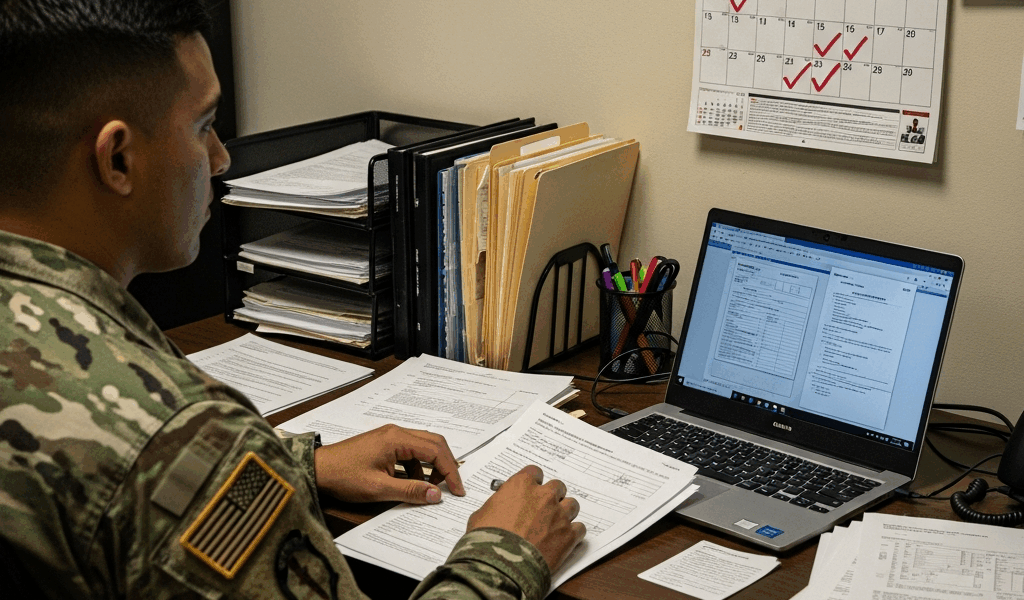
Why Most SkillBridge Applications Stall Before They Start
SkillBridge has gotten complicated with all the conflicting advice flying around. And honestly, most of it skips the part that actually matters — why applications die before they ever reach a host company. It’s not the program. The program works fine. It’s two chokepoints that kill the process every single time.
First one: command approval. Your CO has zero legal obligation to sign off, and plenty won’t unless you give them a real reason to care. Second one: starting the company search too late. I’ve watched service members begin looking 60 days before their ETS date, wondering why serious employers had already filled their slots. That’s not bad luck. That’s a timing problem with a very fixable solution.
Neither of these is mysterious. They just don’t get addressed directly. So today, I’ll share exactly how to handle both — and what to do when things don’t go according to plan.
Step 1 — Get Command Buy-In Before You Apply
Probably should have opened with this section, honestly. Command approval is the gate. You can spend three weeks finding the perfect company, polish your application until it’s flawless, and it all means nothing the moment your CO signs the denial memo.
Approval is not automatic. DoD Instruction 1322.29 gives commanders real discretion here — not token discretion, actual decision-making authority. Some units treat SkillBridge like a retention tool and greenlight it readily. Others see it as a manpower drain, especially during heavy training cycles or pre-deployment windows. Your first move is figuring out which camp your command is actually in before you start building timelines around assumptions.
Start by understanding what your chain of command typically wants to see before they’ll even consider signing off:
- A completed SkillBridge application with a specific host company already identified
- The job description from that company — not a summary, the actual posting
- Proof the internship connects to a real post-military career direction
- Dates that don’t step on deployment schedules or major training events
- A letter explaining how this strengthens your transition readiness
The 180-day mark before your ETS date is when this conversation needs to start. Not 90 days out. At 90 days, units are already locked into staffing plans — your request stops looking like responsible planning and starts looking like a disruption. That distinction matters more than people realize.
Timing is tactical. Don’t float this request during deployment cycles, pre-deployment workups, or IG visits. Your battalion S1 knows exactly when those windows open and close. Ask them directly: “When’s the best point in our annual cycle to bring this forward?” That question alone signals that you’re thinking about unit readiness, not just your own exit. It changes how the conversation gets received.
Some units informally block SkillBridge participation when a large group is rotating out anyway. If your whole company is transitioning in four months, approval actually gets harder, not easier — the logic being that everyone’s already stretched thin managing the turnover. Your transition office usually has a read on your unit’s informal stance. Get that read before you invest weeks in a company search.
Step 2 — Find a Host Company That Actually Responds
Two ways to find a company. The DoD SkillBridge directory or direct outreach. Both have traps worth knowing about before you waste time on either.
The official directory at skillbridge.osd.mil is the obvious starting point — and it is genuinely useful. But a lot of those listings are stale. Companies drop out, change requirements, or stop responding entirely without ever updating their profile. There are internship postings from 2021 still sitting in that database. That’s dead inventory, and you won’t know it until you’ve already sent three unanswered emails.
Verify before you invest any real time. Check the company’s posting date, then go directly to their corporate website. Call their HR line and ask whether they’re actively hosting SkillBridge interns in your specific MOS or field right now. If the person who answers can’t tell you clearly, they’re not running an active program — they’re just on a list.
LinkedIn is where this actually gets done. Search “[Company Name] SkillBridge Coordinator” or “Military Talent Manager.” Find the real human running the program — not a generic HR inbox. Send a direct message using your military email, include your target separation date, and keep your background summary to one tight paragraph. Companies move faster on candidates who come in this way. It demonstrates initiative and cuts their recruitment friction in half.
Reality check — and this one stings a little: some companies have genuinely built pipelines around specific branches or occupational specialties. A tech company might aggressively recruit former signals officers and IT warrant officers but have no infrastructure at all for infantry backgrounds. That’s not discrimination. It’s that their hiring managers already understand how to read certain military qualifications and haven’t built the framework for others. Find companies with actual track records of hiring your specific background. Your transition office usually keeps informal notes on where recent separates from your unit ended up. Ask for that list.
Got rejected on the first try? That’s completely normal — don’t make my mistake of treating it like a closed door. Ask why. The answer is almost always something fixable: your resume still reads like a military performance report, you hit them during a hiring freeze, or they only accept applications through one specific portal that you missed. Fix whatever the issue is, wait 30 days, and reapply to a different hiring manager at the same company.
Step 3 — Lock In Your Timeline Around ETS or Terminal Leave
SkillBridge and terminal leave cannot be stacked — not unless your command explicitly approves it in writing. This detail trips up more people than almost anything else in the process.
Here’s how it actually works. SkillBridge is a DoD-authorized internship that happens while you’re still on active orders. Your military pay and benefits keep running. It is not leave. When the internship ends, you either return to duty or you separate. Terminal leave is a separate thing entirely — you burn your accrued leave days at the end of your service and then transition out.
Want six weeks of SkillBridge followed by terminal leave? Totally possible. But you need command authorization that states exactly that, in writing, before you commit to anything. Most commands approve it without drama. Some don’t. Ask your S1 upfront: “Can a SkillBridge intern transition directly into terminal leave at completion?” Get that answer before you build a schedule around a company’s availability.
Work backward from your ETS date. Separating October 31st and want six weeks of SkillBridge? You’re starting around September 1st — which means you need to apply by mid-August at the latest, earlier if your command is slow on approvals. Add 60 days before that for the company search and initial interviews. That puts your real starting gun at mid-June. Most people don’t do that math until it’s too late.
The 120-day pre-separation window is the sweet spot to launch this whole process. Still at 90 days out? You’ve probably missed the ideal window — though not always. It depends on your unit and how fast they move. Either way, the moment you know you’re in that range, start the command conversation immediately.
Write the timeline down. Seriously — create a document with specific dates and share it with both your chain of command and the host company. Ambiguity is what kills applications that should have sailed through. Clear dates and clear ownership are the fix.
What to Do If Your Command Says No
Denied. It happens. It’s genuinely frustrating. It’s also rarely permanent — and that distinction matters a lot.
A no in January is not a no in May. Commands shift priorities. Personnel change. A request that got shot down when your company commander was managing a deployment might sail through six months later under someone new, or when the training calendar opens up. This isn’t about pestering them until they fold. It’s recognizing that command decisions have context, and context changes.
Three legitimate escalation paths exist when your first request gets denied:
- Ask your battalion S1 or transition officer to advocate on your behalf. These people exist precisely to help service members separate successfully. They’ve seen denial patterns and can usually read whether your command’s resistance is genuinely policy-based or just bad timing on your part. Let them make the second ask. That’s part of their job description.
- Reapply closer to your ETS date. As separation draws near, most units become more cooperative about SkillBridge participation. You’re leaving either way — an internship that helps you land faster reduces the odds you end up in the VA unemployment pipeline. Frame the reapplication exactly that way. If you were denied at 180 days out, try again at 90.
- Find a different company and reapply with a fresh submission. Sometimes a commander rejected the first application because the company or role seemed disconnected from the service member’s actual career direction. Pick a company squarely in your target industry, write a brief note about why this one is a stronger fit, and resubmit. That single change can shift the conversation entirely.
What you shouldn’t do: go around the chain of command. Calling your general’s office or filing an IG complaint over a legitimate command decision will not help you — and will actively hurt you in ways that outlast the SkillBridge question. Commanders have discretion here. Using that discretion is not an abuse of power.
But do persist through proper channels. A no isn’t often the final word if you give it time and approach it right.




Leave a Reply